Room to Play: How Tullahoma Gives Every Kid a Real Shot at the Things They Love
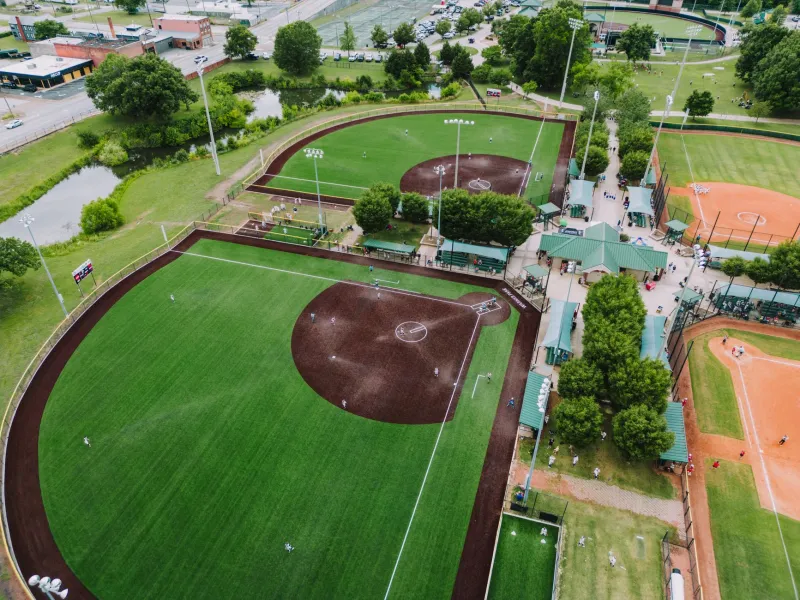
There's a moment every parent in a big city knows too well. You've just spent forty-five minutes in traffic to drop your kid off at a travel soccer tryout, paid a non-refundable registration fee, and now you're sitting in a parking lot scrolling your phone while seventy other kids compete for twelve spots on a team. Your kid is talented. They love the game. And there's still a solid chance they go home disappointed.
That's not really how things work in Tullahoma.
This town of roughly 20,000 people has quietly built something that bigger metros can't easily replicate — a youth activity ecosystem where kids actually get to participate, not just audition for the privilege of participating. Whether it's Little League, the school band, community theater, 4-H, or robotics club, Tullahoma tends to operate on a simple principle: if your kid wants in, there's usually a way to get them in.
That might sound modest. But talk to any family that relocated here from Nashville, Huntsville, or Atlanta, and they'll tell you it's one of the first things they noticed — and one of the biggest reasons they stayed.
What "Access" Actually Looks Like
In larger cities, extracurricular access is often a function of income, connections, or geography. Elite travel teams charge thousands per season. Private music lessons run $80 to $150 an hour. Competitive theater programs can require auditions that feel more like job interviews than opportunities for kids to grow.
Tullahoma doesn't operate in that world. Most youth sports programs through the city's parks and recreation department remain genuinely affordable, and the emphasis — especially at younger ages — stays on participation and development rather than early specialization. Local coaches tend to be people who live in town, know families by name, and measure success by whether kids are improving and having fun, not just whether the scoreboard favors them.
The Tullahoma City Schools system supports a strong slate of extracurricular programming as well. Fine arts, athletics, academic competitions, and clubs are accessible in ways that reflect the school system's investment in the whole student — not just the ones who are already excelling.
For families coming from larger districts where budget cuts have gutted arts programs or where JV sports barely exist because of oversized rosters, this can feel almost surprising.
The Mentorship Factor
One of the quieter advantages of a smaller community is how close kids get to real mentors. In a city of millions, the coach of a youth basketball program might rotate through dozens of kids a season without ever learning most of their names. In Tullahoma, that same coach probably knows your kid, knows your family, and will talk to you at the grocery store about how practice went.
That kind of mentorship has compounding value. Kids who feel seen by adults outside their immediate family tend to build confidence differently. They take more risks, ask more questions, and develop a sense that they belong to something bigger than their household.
Local instructors — music teachers, martial arts coaches, art studio owners — operate the same way. Many of them have been in Tullahoma for years or decades. They have long-term relationships with students and genuine investment in their development. When a kid sticks with piano lessons for four years, their teacher actually knows the arc of that journey. That's not something you get at a chain music school with high turnover.
Kids Who Shape Culture Instead of Getting Lost In It
Here's something that doesn't get talked about enough: in large cities, even an exceptionally involved kid can feel anonymous. They play on a team, but the league has 400 teams. They perform in a school play, but the school has 3,000 students. The scale works against the feeling that any individual contribution matters.
Tullahoma flips that dynamic. When the high school band performs at a community event, people in town actually know those kids. When a local student wins a regional science competition, it shows up in the paper and gets talked about at the diner. Youth sports championships draw real crowds of community members who aren't just the parents of players.
For kids, that kind of visibility is genuinely meaningful. It reinforces that their effort matters — not just to their family, but to the community around them. And for adolescents figuring out who they are and where they fit, that's not a small thing.
What It Means for Family Life Day-to-Day
Beyond the philosophical benefits, there's a practical reality that Tullahoma families tend to appreciate: life here is just less logistically brutal.
When your kid's soccer practice is fifteen minutes away instead of forty-five, you get dinner on the table at a reasonable hour. When registration fees aren't draining your discretionary budget, you have more flexibility for family experiences that matter. When schedules aren't packed with mandatory travel tournaments every other weekend, you actually have weekends.
Parents in Tullahoma frequently mention this when describing why they love raising kids here. The pace allows for something that's genuinely hard to find in high-pressure metro areas: breathing room. Time to be a family without every evening being a logistical puzzle.
That breathing room also tends to make kids more well-rounded. They have space to try different things, discover what they actually love (rather than what they've been groomed toward since age six), and develop interests that aren't purely resume-driven.
A Community That Invests in Its Young People
Tullahoma has a long track record of taking its youth seriously — not in a performative, ribbon-cutting way, but in the practical sense that local organizations, businesses, and civic groups consistently show up for kids. Sponsors for youth leagues aren't hard to find. Volunteers for school events actually show up. Local businesses participate in school fundraisers because they know the families involved.
That investment creates a feedback loop. Kids who grow up feeling genuinely supported by their community tend to stay connected to it — or come back to it. And the families who experience that culture of investment tend to put down roots rather than treat Tullahoma as a temporary stop.
For parents weighing where to build a life, that's worth thinking about seriously. The question isn't just what a town offers your kids right now. It's what kind of people it helps them become — and whether the community around them makes that easier or harder.
In Tullahoma, the answer is pretty consistently: easier. And that counts for a lot.