Why Mid-Sized Companies Are Skipping Nashville and Picking Tullahoma Instead
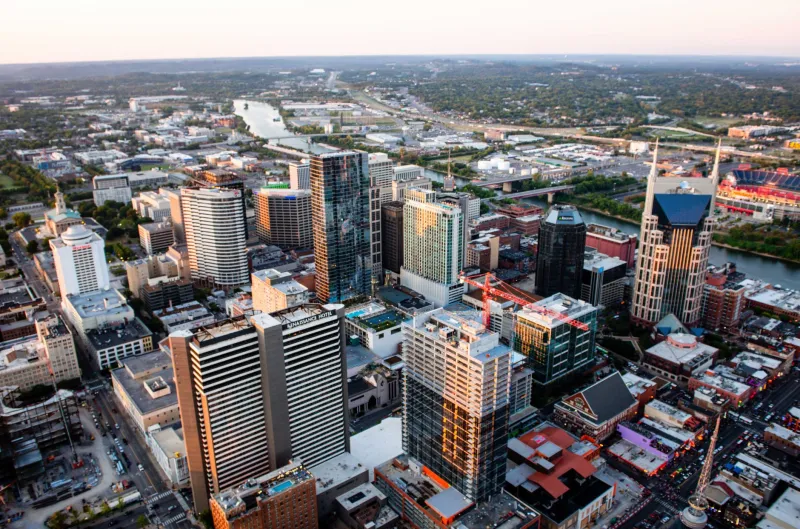
Something quietly significant is happening in Coffee County. Mid-sized corporations and regional business units are bypassing the usual suspects—Nashville, Chattanooga, even Huntsville—and setting up shop right here in Tullahoma. It's not a coincidence, and it's not just about cheap real estate. We dug into what's actually driving that decision, and the answer turns out to be more layered than most people expect.
The Numbers That Start the Conversation
Every corporate site selection process begins with a spreadsheet, and Tullahoma's numbers have a way of stopping people mid-scroll. Tennessee's overall business climate is already favorable—no state income tax on wages, a relatively low corporate tax rate, and a long track record of courting manufacturers and tech-adjacent operations. But what Tullahoma adds on top of that state-level foundation is where things get interesting.
The Tullahoma-Coffee County region has consistently offered competitive property tax rates compared to urban cores, and the cost of commercial and industrial space remains dramatically lower than what companies would pay in Nashville or even Murfreesboro. For a mid-sized company moving a logistics hub, a back-office operation, or a light manufacturing line, those savings compound fast. We're talking about the kind of difference that pays for several additional hires in year one.
Beyond raw cost, the Tennessee Valley Authority's economic development arm has historically worked with communities like Tullahoma to package utility incentives for qualifying businesses—something that carries real weight for operations with significant energy demands.
The Workforce Conversation Nobody Talks About Enough
Ask economic development professionals what actually closes a deal, and most of them will tell you it's workforce. Fancy incentive packages don't matter if a company can't find people to fill the seats.
Tullahoma has a quiet advantage here that doesn't always make the press releases. Motlow State Community College sits just outside of town and has spent years building out technical and workforce training programs that align with the kinds of jobs growing employers actually need—advanced manufacturing, logistics, business technology, healthcare support. That pipeline of trained, local talent is something a lot of smaller markets simply can't offer.
There's also a retention factor that companies in larger metros envy. Employees who land in Tullahoma tend to stay. The cost of living means a paycheck stretches further, the commute is manageable, and the community has enough going on socially and recreationally that people build real roots here. High turnover is expensive. Tullahoma's lifestyle proposition helps solve that problem before it starts.
What Economic Development Officials Are Saying
The Tullahoma Area Chamber of Commerce and local economic development partners have been intentional about positioning the city as a legitimate alternative to larger hubs. The pitch isn't "we're cheaper than Nashville." It's more nuanced than that.
The story officials are telling to site selectors focuses on infrastructure readiness—Tullahoma Municipal Airport, proximity to I-24, and access to rail freight—combined with the city's demonstrated ability to absorb growth without the chaos that comes with larger metros. There's a responsiveness here that companies notice. When a business has a question or a need during the site selection process, they're talking to actual decision-makers, not layers of bureaucracy.
Recent corporate arrivals have noted that the onboarding experience—getting permits processed, connecting with local contractors, navigating zoning—felt genuinely collaborative rather than adversarial. That's not something you can put in a brochure, but it travels fast through the site selection community by word of mouth.
Quality of Life as a Business Strategy
Here's a shift that's been building for a while and accelerated sharply after 2020: companies are increasingly factoring in where their leadership and key employees actually want to live, not just where the logistics make sense on paper.
Tullahoma holds up well under that kind of scrutiny. The town has a walkable downtown that's been steadily adding restaurants and retail. Tims Ford Lake is essentially in the backyard. The school system has a solid reputation, which matters enormously for any executive relocating a family. And the general vibe—unhurried, genuinely friendly, low on pretension—is something that plays well with people who've grown tired of urban grind.
For companies moving whole departments or bringing in management teams, the ability to tell potential transferees "you're going to like living there" is more valuable than it sounds. Relocation resistance from key employees has torpedoed more than a few otherwise smart corporate moves. Tullahoma tends to clear that hurdle.
The Aerospace and Defense Halo Effect
It's impossible to talk about Tullahoma's business environment without acknowledging the presence of the Arnold Engineering Development Complex—one of the most significant aerospace testing facilities in the world. AEDC doesn't just employ a lot of people directly; it creates a gravitational pull for defense contractors, engineering firms, and advanced manufacturing suppliers who want proximity to that work.
That cluster effect has given Tullahoma a technically sophisticated workforce and a culture of precision and process discipline that transfers well to other industries. Companies in sectors far outside aerospace have noticed that the local talent pool punches above its weight in terms of technical literacy and work ethic—a byproduct of decades of high-skill employment in the area.
What's Still a Work in Progress
It would be dishonest to paint this as a zero-friction story. Tullahoma is still working through some of the infrastructure and amenity gaps that come with being a smaller city competing for attention against much larger markets. Hotel capacity for visiting executives and clients is limited. The restaurant and entertainment scene, while improving, isn't Nashville. And broadband infrastructure, while adequate for most uses, is still an ongoing conversation in parts of the county.
Local leaders are candid about these gaps and point to active efforts to address them. But companies doing their due diligence should factor in what their specific operation actually needs—because for many business models, these limitations are essentially irrelevant.
The Bigger Picture
What's happening in Tullahoma isn't an accident, and it isn't just a pandemic-era blip. It reflects a genuine rebalancing happening across mid-sized American cities that offer a compelling combination of affordability, infrastructure, workforce quality, and livability. Tullahoma has been quietly building the conditions for this moment for years.
For businesses still defaulting to the same tired shortlist of metros when they think about expansion or relocation, Tullahoma is worth a real look—not as a consolation prize, but as a strategic choice that a growing number of smart operators are making on purpose.