The Families Behind Tullahoma: Legacy, Influence, and What It Means to Truly Belong
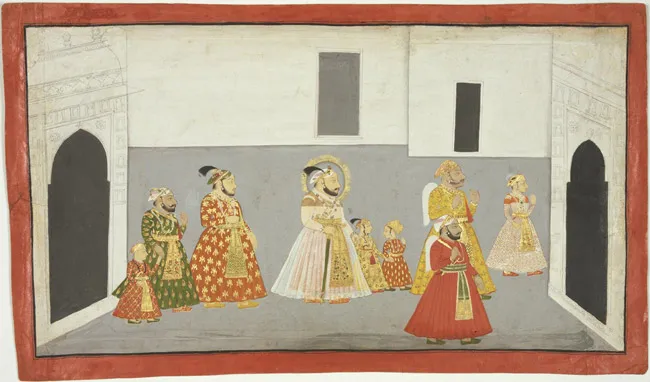
Photo: Artist/maker unknown, India, Public domain, via Wikimedia Commons
When History Has a Home Address
Drive through Tullahoma long enough and certain names start to appear in unexpected places. On a park bench plaque. On a school building. In a conversation about who to call when you need something done at the county level. In a town that's been here since the mid-1800s, that kind of accumulated presence is inevitable — and it says something meaningful about how communities actually function over time.
Tullahoma isn't unique in having long-rooted families with outsized civic influence. But it might be unusual in how openly that influence operates, and how genuinely it tends to be oriented toward the town's long-term health rather than short-term gain. At least, that's the picture that emerges when you start talking to people on both sides of the equation — those whose grandparents helped build the place, and those who arrived last year and are still learning the landscape.
The Weight of a Family Name
For families who've been here for three or four generations, Tullahoma isn't just where they live. It's a project they've been invested in for longer than most of its current residents have been alive.
Take the involvement of long-standing families in Coffee County's school system. It's common to find parents serving on school boards whose own parents volunteered in classrooms, whose grandparents helped fundraise for building expansions decades ago. That continuity creates institutional memory that's genuinely hard to replicate. When a budget decision comes up that echoes one from twenty years ago, someone in the room often remembers how it played out last time.
"There's a sense of stewardship that gets passed down," says one longtime resident who asked to speak generally rather than be named. "My dad cared about this town, and I grew up watching that. You absorb it. You feel like it's partly your responsibility."
That sense of inherited responsibility shows up in city government, in civic organizations like the Rotary and the Chamber, and in the donor rolls of local nonprofits. The same surnames cycle through in different generations, different roles, different decades.
Influence Isn't Always Visible
It would be easy to frame multi-generational influence as a story about power — who has it, who doesn't, and whether that's a problem. But in Tullahoma, the reality is more nuanced than a simple insider-outsider narrative.
Many of the families with deep roots here have used their standing not to gatekeep but to advocate. Local business owners from established families have been vocal supporters of economic development initiatives that would bring new competitors to town. School board members from longtime families have pushed for curriculum updates that reflect a more diverse student population than Tullahoma had a generation ago.
Still, newcomers are honest about the learning curve. Sandra Okonkwo moved to Tullahoma from Nashville four years ago and launched a small bookkeeping practice. She describes her first year as a process of mapping a social and professional network that already existed long before she arrived.
"Everyone was perfectly friendly," she says. "But there were relationships and understandings in place that I didn't have access to yet. It took time to figure out who knew who, and why that mattered for how business got done."
She's quick to add that she's found her footing, largely through the Chamber and through a couple of established business owners who took time to make introductions. But the initial experience of being an outsider in a tight-knit town was real.
What 'Everyone Knows Everyone' Actually Means
Tullahoma's social fabric is dense in the way that's particular to small Southern towns. Families are connected across multiple contexts simultaneously — your neighbor might also be your kid's soccer coach, your doctor's spouse, and the person who votes on your zoning variance request. That overlap can feel warm and reassuring or faintly claustrophobic depending on the day.
For longtime families, it's simply the texture of normal life. For newcomers, it requires a period of adjustment and, in some cases, a recalibration of expectations about privacy and anonymity.
"In a city, you can have a bad day at work and nobody in your neighborhood knows about it," says one transplant who's been in Tullahoma for about two years. "Here, there's a version of accountability built into daily life that I wasn't used to. I've come to appreciate it, but it took getting used to."
That accountability, longtime residents argue, is part of what keeps the community functional. When everyone knows everyone, there's a natural incentive to behave well, follow through on commitments, and invest in relationships that aren't purely transactional.
Passing the Torch Without Blocking the Door
The more interesting question for Tullahoma's future isn't whether long-established families will continue to be influential — they will — but whether that influence evolves to make room for new voices and new energy.
There are signs that it is. Several civic institutions have made deliberate efforts to recruit younger members and newcomers into leadership roles. The Chamber has expanded its programming to serve businesses that don't fit the traditional mold. The school system has brought in administrators from outside the region with specific mandates to modernize.
And in many cases, the families with the longest roots have been the ones pushing for that openness. They understand, perhaps better than anyone, that a town which can't absorb new people and new ideas eventually stops growing. They've watched other small Tennessee towns contract while Tullahoma has managed to hold its own.
"My grandfather used to say that you take care of the town and the town takes care of you," says one third-generation resident now involved in local government. "But taking care of it means making sure there's room for people who didn't grow up here. Otherwise you're just preserving a memory, not building something real."
Belonging Is Built, Not Inherited
For newcomers, the path to genuine belonging in Tullahoma is less mysterious than it might initially seem. It runs through showing up — to Chamber events, to school board meetings, to the neighborhood association, to the volunteer opportunities that established families have been staffing for years. It means investing in the community before expecting the community to invest back.
That's not so different from what the founding families did in the first place. They didn't inherit a ready-made community. They built one, over generations, through consistent presence and commitment.
Tullahoma's long-time families aren't a closed circle. They're a standard being set — one that the next generation of residents, wherever they came from, is already beginning to meet.