No Airs, No Attitude: How Tullahoma's Down-to-Earth Culture Became Its Biggest Draw
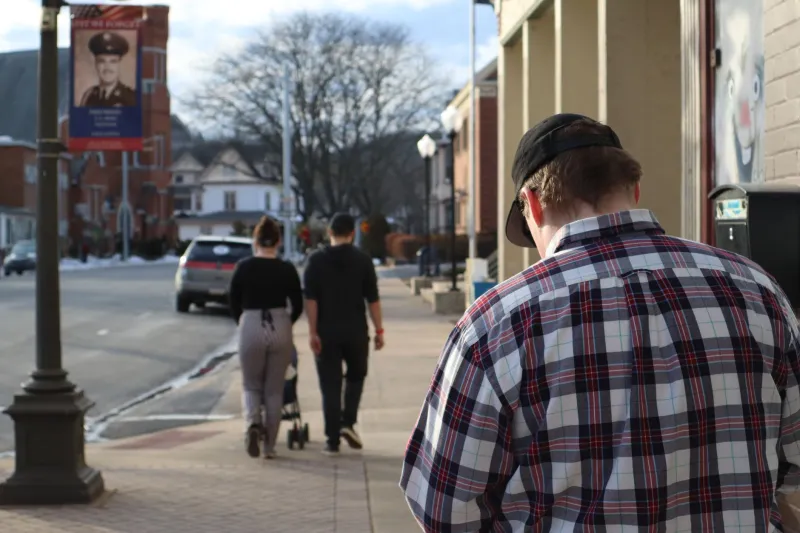
There's a moment that a lot of people describe after moving to Tullahoma. It usually happens within the first few weeks. Maybe you're at the grocery store, or waiting in line at a local diner, and someone strikes up a conversation. Not a networking pitch. Not a subtle sizing-up. Just a regular, honest conversation between two people who happen to be standing in the same place.
For folks arriving from Nashville, Atlanta, or any major metro, that moment can feel almost disorienting. Where's the performance? Where's the posturing? After a while, though, the disorientation fades — and what replaces it is something most people didn't even know they were missing.
Tullahoma doesn't have a velvet rope. And that, surprisingly, is one of the most powerful things going for it.
Status Takes a Back Seat Here
In larger cities, success tends to announce itself. The car you drive, the neighborhood you live in, the restaurant you're seen at — all of it functions as social currency. That's not a criticism, it's just how dense, competitive urban environments tend to operate. Status signaling becomes a language everyone learns to speak, whether they want to or not.
Tullahoma doesn't really speak that language. A business owner who employs 40 people might live three streets over from a line worker at one of the local manufacturers, and both of them coach youth soccer on Saturday mornings without anyone making a big deal of it. The doctor goes to the same Friday night football game as the electrician. The engineer at Arnold Air Force Base grabs lunch at the same spots downtown as the guy who runs the landscaping company.
That kind of social flattening isn't accidental — it's cultural. It's baked into how this town operates, and it creates an environment where people feel like they belong without having to earn their way into some invisible hierarchy first.
What That Means for Business
Here's where things get interesting from a practical standpoint. When you strip away the pretension, what you're left with is trust — and trust, it turns out, is extraordinarily useful in business.
In Tullahoma, a handshake still means something. Referrals happen because someone genuinely thinks you do good work, not because you're in the right LinkedIn circle or attended the right fundraiser gala. Local business owners talk about a kind of transactional honesty that's harder to find in bigger markets. When someone recommends a contractor or a caterer or a financial advisor in this town, it's usually because they've had a real experience with that person — not because they're trying to climb a social ladder by association.
That authenticity has real economic value. It lowers the friction of doing business. It speeds up relationship-building. And it creates a reputation economy where quality work actually gets rewarded, because word travels fast in a community where people actually talk to each other face-to-face.
For entrepreneurs and small business owners, that's a significant advantage. You're not competing for attention against a thousand other voices. You're operating in a place where showing up consistently and treating people well is enough to build something real.
Why Quality People Keep Choosing It
There's a growing body of anecdotal evidence — and honestly, you can see it if you pay attention — that Tullahoma is attracting a certain kind of person. Not necessarily the flashiest resume or the biggest ambition in the traditional sense. But people who are genuinely good at what they do and are looking for a place where that's enough.
Remote workers, in particular, have caught on. When your income is decoupled from geography, the calculus changes. You stop asking "where can I make the most money?" and start asking "where do I actually want to live?" For a surprising number of people, that question leads them here. The cost of living is manageable, the pace is sane, and nobody's going to judge you for driving a five-year-old truck.
The same logic applies to families. Parents who are tired of raising kids in environments where social comparison starts in elementary school find something genuinely refreshing about a place where the culture doesn't demand constant performance. Kids in Tullahoma can just be kids. That's not nothing — in 2025, that's actually kind of rare.
The Community Bond That Money Can't Manufacture
Larger cities spend enormous amounts of money trying to create "authentic community." They fund placemaking initiatives, hire urban consultants, build expensive mixed-use developments designed to encourage spontaneous human connection. And sometimes it works, a little. But you can't really manufacture what Tullahoma already has.
The bonds here are strong because they're built on shared experience rather than shared demographics or shared income brackets. When a local business has a rough patch, people show up — not because they got a push notification about a support campaign, but because they know the owner personally. When someone's house floods or a family hits a hard stretch, the response is practical and immediate because the community actually knows each other.
That social infrastructure has real resilience. It's the kind of thing that holds a town together during hard times and accelerates recovery when things go sideways. And it's genuinely difficult to replicate in a city where most people don't know their neighbors' names.
Keeping It Real as Tullahoma Grows
None of this is to say Tullahoma is perfect or immune to change. Growth brings pressure, and there are real conversations happening in town about how to expand the economy, improve infrastructure, and attract investment without accidentally importing the cultural baggage that comes with rapid development.
The good news is that the people who care most about this place are paying attention. There's a kind of collective awareness here — maybe because the community is small enough that people can actually see the effects of decisions in real time — that tends to pump the brakes on the worst instincts of unchecked growth.
The goal isn't to stay small forever. It's to grow without losing the thing that makes this place worth growing in the first place.
And that thing? It's simpler than any economic development strategy. It's just the basic, stubborn commitment to treating people like people — regardless of what they drive, where they live, or how much they make.
In a world full of places trying hard to seem like something, Tullahoma just keeps being itself. Turns out, that's a harder act to follow than it looks.